
Share article


Annual Report: How design is elevating ASX reporting beyond compliance
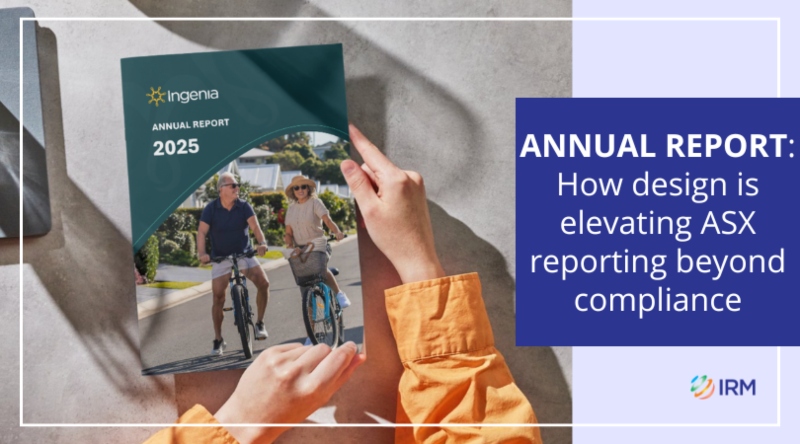
- Annual report design now plays a strategic role in shaping investor perception and market confidence.
- Clear structure and data visualisation help investors interpret complex information faster.
- Companies that elevate reporting beyond compliance strengthen credibility with the market.
For ASX-listed companies, the annual report has traditionally been treated as a regulatory requirement. It must be accurate, comprehensive and compliant.
However, compliance alone is no longer enough.
Today, ASX annual report design plays a strategic role in capital-markets communication. When executed well, it strengthens investor perception, reinforces management credibility and supports long-term valuation.
Across the ASX’s most influential sectors, Materials, Financials and Health Care, companies are increasingly using design to elevate reporting beyond compliance. Importantly, strong design does not decorate results – instead, it improves how performance, governance and strategy are understood by the market.
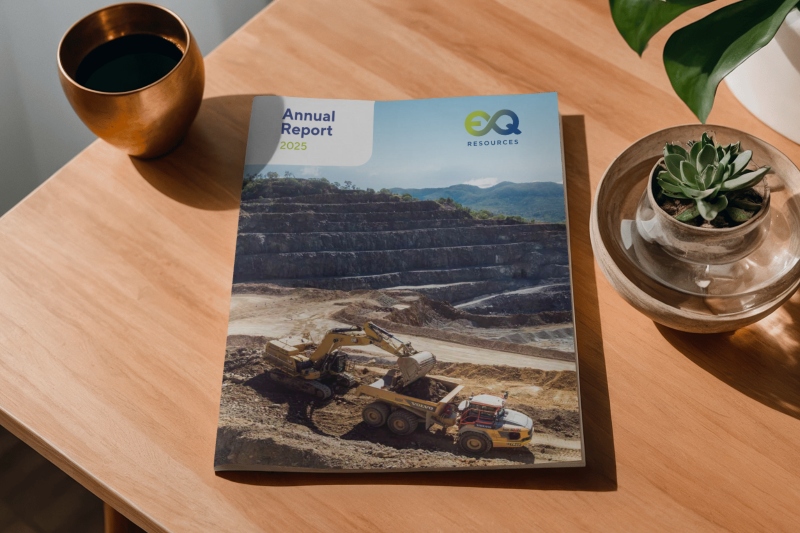
Annual report design is strategic in shaping investor perception.
From Disclosure to Strategic Presentation
Historically, many annual reports prioritised completeness over clarity. As a result, key messages were often buried within dense disclosures.
Now, leading ASX companies are taking a more structured approach.
Clear typography hierarchy, defined sections and thoughtful use of white space make complex information easier to navigate. Consequently, investors can identify key insights more quickly.
This shift is particularly valuable in sectors where reporting complexity is high.
For example, Materials companies must communicate operational metrics, reserves and cost discipline clearly. Financial firms need to present capital buffers, liquidity and risk frameworks transparently. Meanwhile, Health Care companies must connect clinical milestones with commercial strategy and funding runway.
When design supports structure, reporting becomes easier to interpret and more persuasive.
Strengthening Interpretation Through Data Visualisation
Investors are not short of data. They are short of time.
As a result, many companies are replacing dense tables with visual summaries such as KPI dashboards, trend charts and capital allocation diagrams. These tools allow investors to interpret performance quickly.
For instance, a Materials company might show cost resilience across commodity cycles in a visual chart. Similarly, a Financial organisation may illustrate liquidity positioning relative to regulatory requirements. A Health Care company can also map clinical progress against capital runway in a clear timeline.
Effective visualisation highlights what matters most while removing unnecessary complexity. In turn, this strengthens investor understanding.

Data visualisation helps investors interpret complex information.
Integrating Governance and ESG
Sustainability and governance are now central to investor evaluation. Consequently, strong annual report design integrates these themes throughout the report.
Rather than isolating ESG in a standalone section, companies increasingly embed it within operational and financial discussions. Climate metrics appear alongside operational performance, while remuneration alignment and risk frameworks are presented visually.
This integrated approach signals oversight maturity and reinforces transparency, particularly important in Materials and Financials, where risk management is closely scrutinised, and in Health Care, where regulatory pathways are critical.
Designing for a Digital Audience
Another important shift is digital-first design.
Annual reports are now primarily read on screens. Therefore, clear navigation, mobile-friendly layouts and interactive formats are becoming standard.
For companies with global investors, especially in Financials and Health Care, accessibility across devices improves engagement and reach.
When design works effectively across both print and digital formats, reporting becomes significantly more impactful.
The Strategic Role of Design
Ultimately, design shapes how information is interpreted.
In Materials, strong design reinforces operational discipline. For Financials companies, it strengthens perceptions of stability and governance. Meanwhile, in Health Care it enhances confidence in scientific and commercial progress.
For boards and executives, this means annual reports should be viewed as capital-markets assets, not simply compliance documents. For marketing and investor relations teams, it means ensuring design, messaging and structure work together.
Companies that invest in strong ASX annual report design move beyond compliance and communicate with greater clarity, credibility and intent.
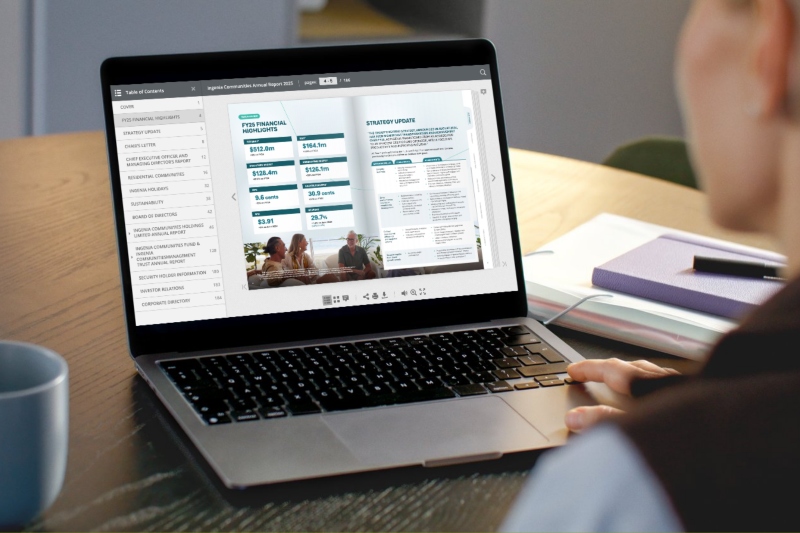
Companies that elevate reporting beyond compliance strengthen credibility.
Ready to Elevate Your Annual Report?
Designing a high-impact annual report does not need to be overwhelming. With experienced investor-focused specialists, your reporting can move beyond compliance and become a powerful capital-markets asset.
Our IRM team delivers annual report designs that combine clarity, credibility and strategic presentation, whether in print or digital format. Request a tailored quote today. Contact us on +61 2 8705 5444 or email clientrelations@irmau.com to begin planning your next annual report with confidence.
Related blog posts:
How your Annual Report gains advantage with IR design experts
How AI can help with your Annual Report
Annual Reports: What industry leaders are doing differently